

Showingof 208 item(s)
For more than 40 years, Mason Color has been a global supplier of high-performance pigments to all sectors of the ceramic industry. These include pigments for use in the manufacture and production of pottery, artware, and bricks. Sold in 100g increments.
C$15.40
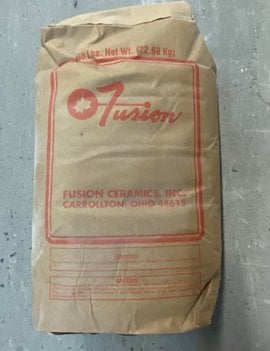
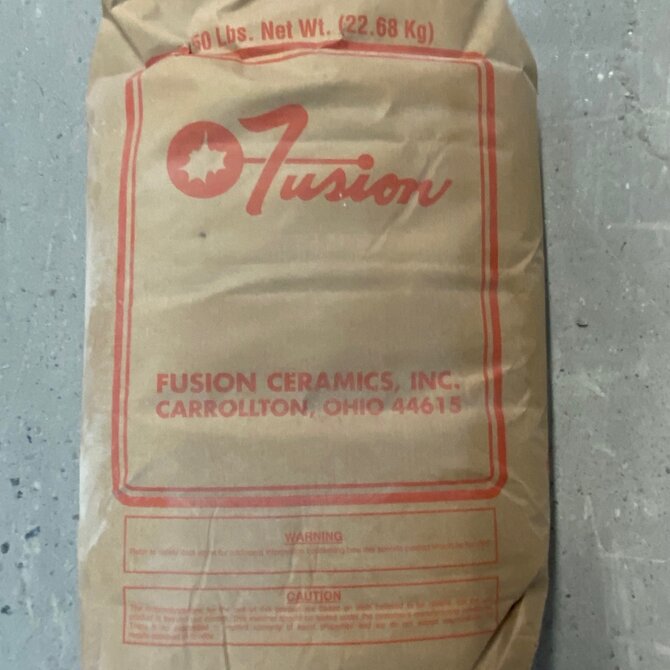
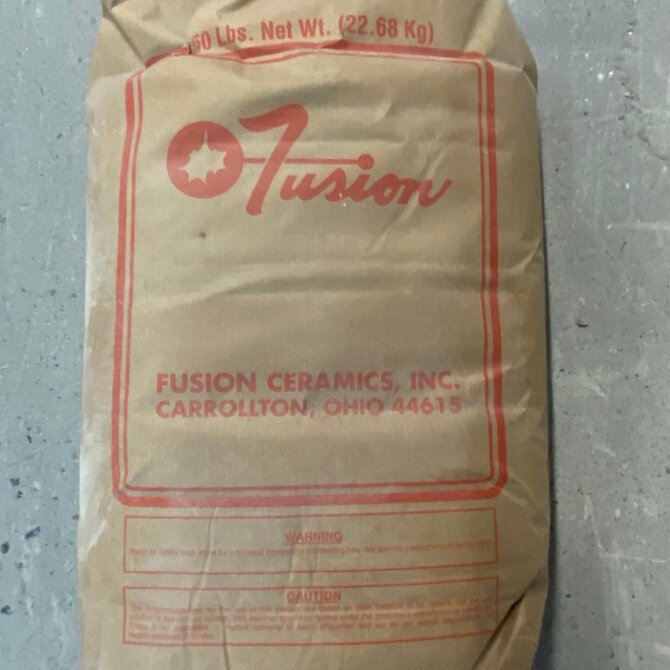
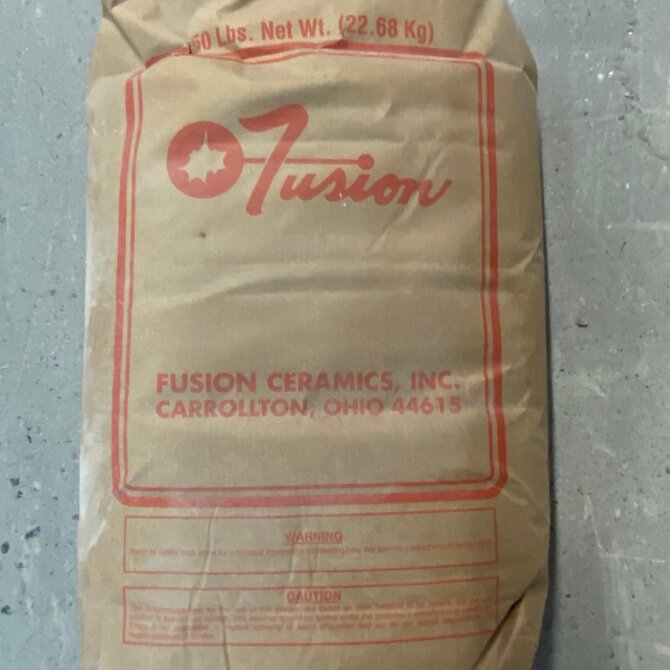
On paper, Fusion F-12 has a very similar chemistry to 3134.
C$11.00
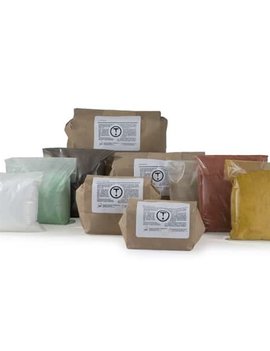
Spodumene (substitute) is a silicate mineral often referred to as lithium feldspar. Commonly used in ceramics as a source of lithia which is used as a powerful flux especially when used with potash and soda feldspars.
C$94.15
For more than 40 years, Mason Color has been a global supplier of high-performance pigments to all sectors of the ceramic industry. These include pigments for use in the manufacture and production of pottery, artware, and bricks. Sold in 100g increments.
C$15.45

For more than 40 years, Mason Color has been a global supplier of high-performance pigments to all sectors of the ceramic industry. These include pigments for use in the manufacture and production of pottery, artware, and bricks. Sold in 100g increments.
C$8.55
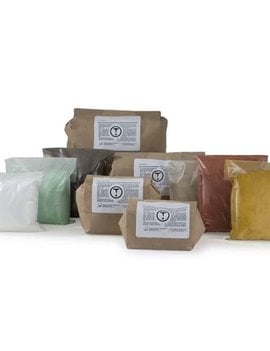
Manganese Dioxide is a black powder used as a glaze colourant typically giving browns, blacks and, at high concentrations, metallics. A strong flux when added in large amounts to clay bodies.
C$9.80

Black Iron Oxide can create varied effects depending on the conditions. One of the most common colourants in pottery.
C$13.85
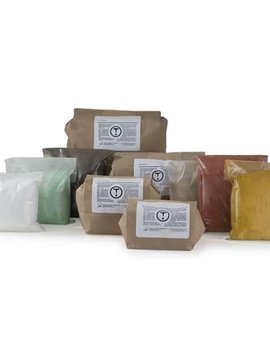
Mulcoa Kaolin Grog 35 Mesh is a medium-grained calcined mullite grog. This grog can be added to throwing and sculpture clay bodies to increase working strength and reduce shrinkage as well as an aid in drying thick pieces.
C$22.00
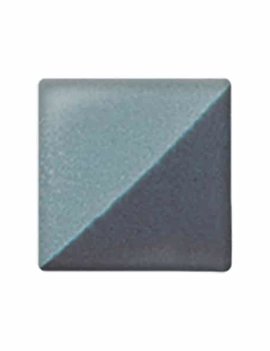
Spectrum's 2000 Series Ceramic Stains can be used to colour glazes, underglazes, engobes, slips and clay bodies. Available in a beautiful pallet, these stains are great to work with and, for the most part, intermixable to create new shades.
C$10.75

Copper Carbonate is a green powder used as a glaze or slip colourant. Depending on conditions and formulation it may produce green, blue-green or copper red (reds occurring most commonly in reduction firings).
C$35.50
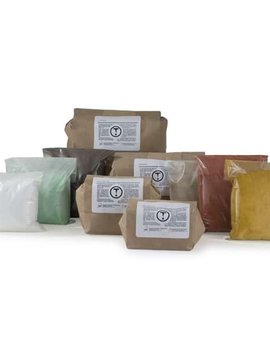
Bone Ash (TriCalcium Phosphate) is source of calcium and phosphate traditionally used in bone china for translucency and lowering the maturing temperature.
C$13.55
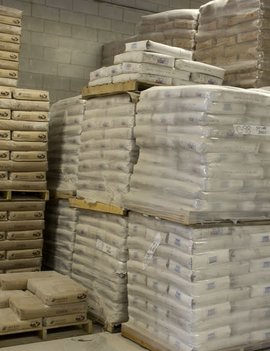
Bell Dark Ball Clay is a very plastic ball clay used in clay bodies of all types. Light-firing and good dry strength. Suitable for use in glaze recipes calling for ball clay.
C$9.25
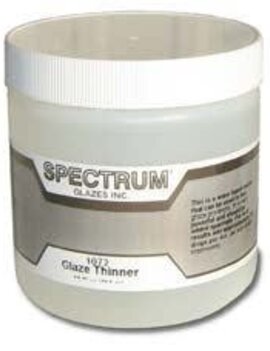
This Glaze Thinner by Spectrum is a solution of sodium hexametaphosphate in water. It is a very powerful thinning agent and should be added sparingly.
C$10.00
For more than 40 years, Mason Color has been a global supplier of high-performance pigments to all sectors of the ceramic industry. These include pigments for use in the manufacture and production of pottery, artware, and bricks. Sold in 100g increments.
C$9.50

For more than 40 years, Mason Color has been a global supplier of high-performance pigments to all sectors of the ceramic industry. These include pigments for use in the manufacture and production of pottery, artware, and bricks. Sold in 100g increments.
C$9.95
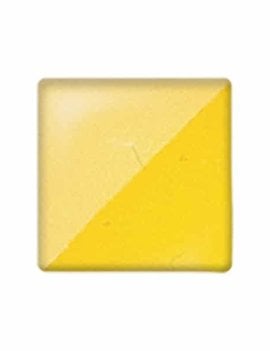
Spectrum's 2000 Series Ceramic Stains can be used to colour glazes, underglazes, engobes, slips and clay bodies. Available in a beautiful pallet, these stains are great to work with and, for the most part, intermixable to create new shades.
C$12.00
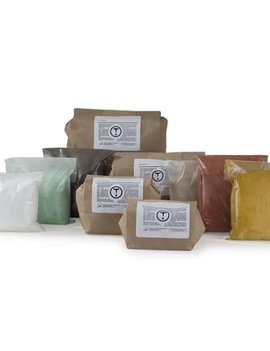
Chromium Oxide (aka Chrome Oxide) is a versatile colourant used in glazes to most commonly produce various green tints.
C$30.35
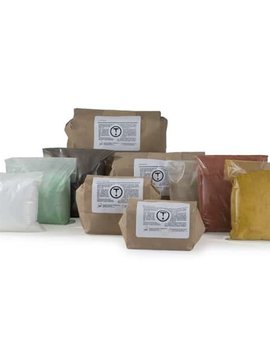
Borax Decahydrate is a water soluble, low temperature flux which lowers the fusion point of glazes and promotes a smooth melt. A source of sodium and boric oxide in glazes.
C$13.55
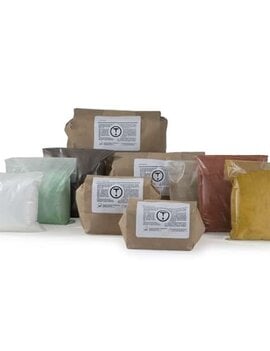
Gillespie Borate is a blended borate material designed for use in glazes to replace Gerstley Borate. It has been on the market for over 20 years.
C$13.95
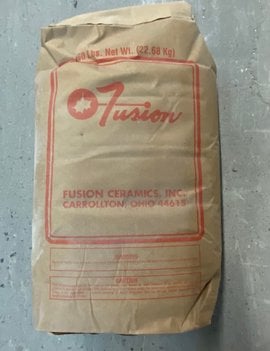
On paper, Fusion F-2 has a very similar chemistry to 3195.
C$12.00
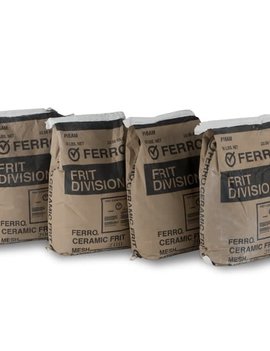
Frit 3195 contains sodium, calcium and boron. It is used in satin, earthenware glazes.
C$11.70
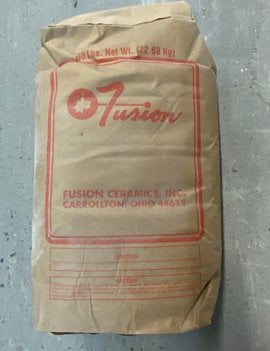
On paper, Fusion F-19 has a very similar chemistry to 3124.
C$9.60
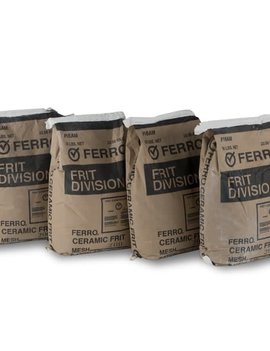
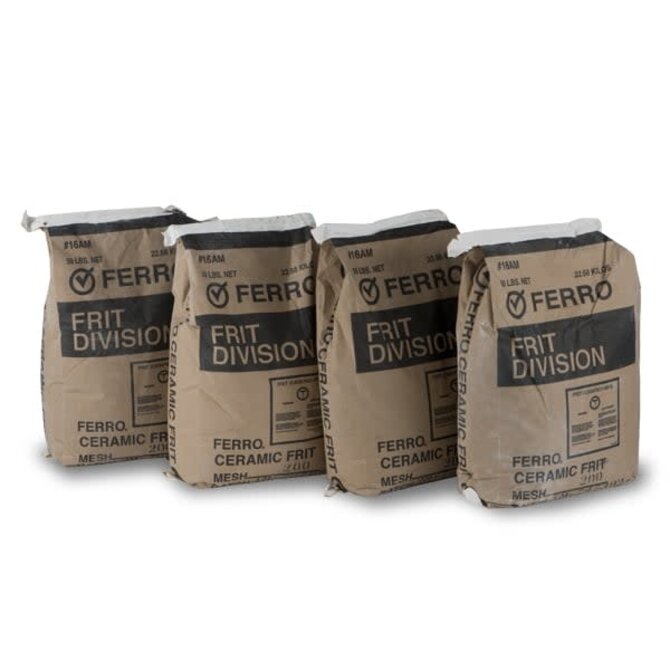
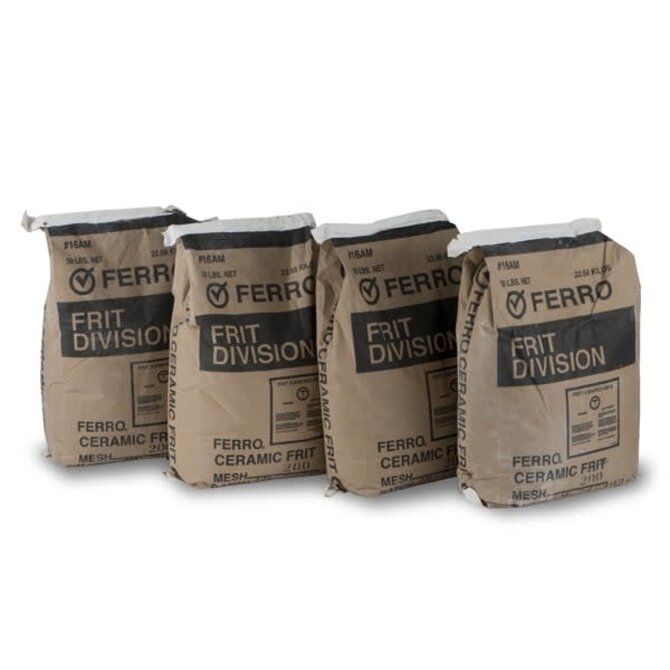
Ferro Frit 3249 is a low expansion leadless magnesia borosilicate frit. This type of frit is the most effective way to reduce crazing in your glazes.
C$27.70
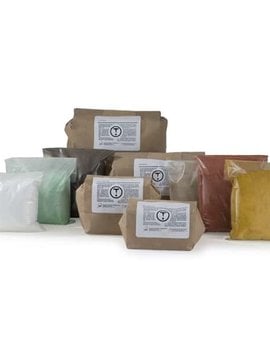



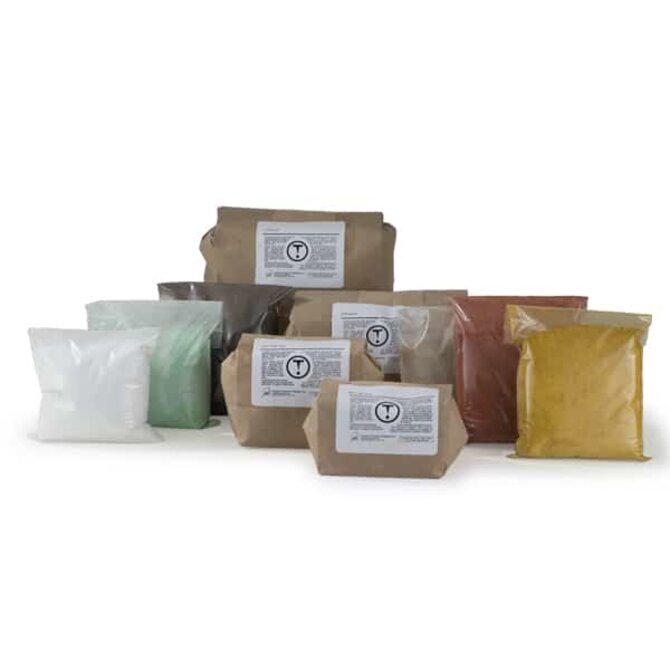
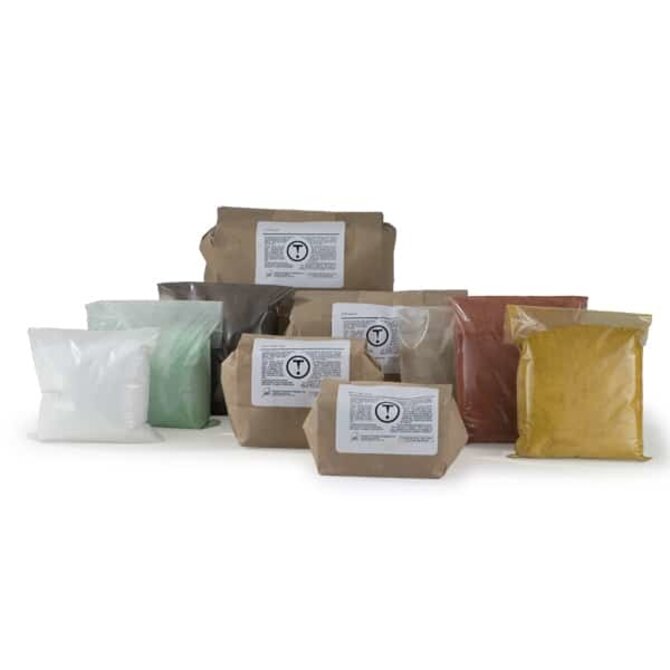
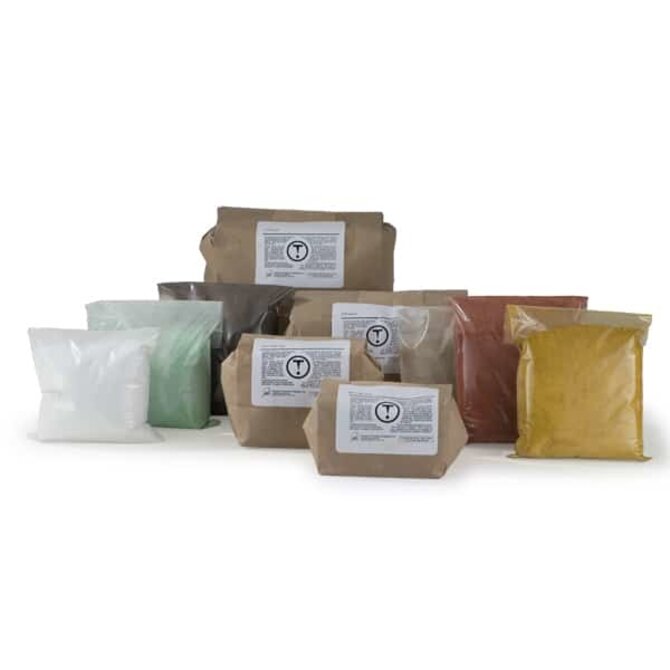
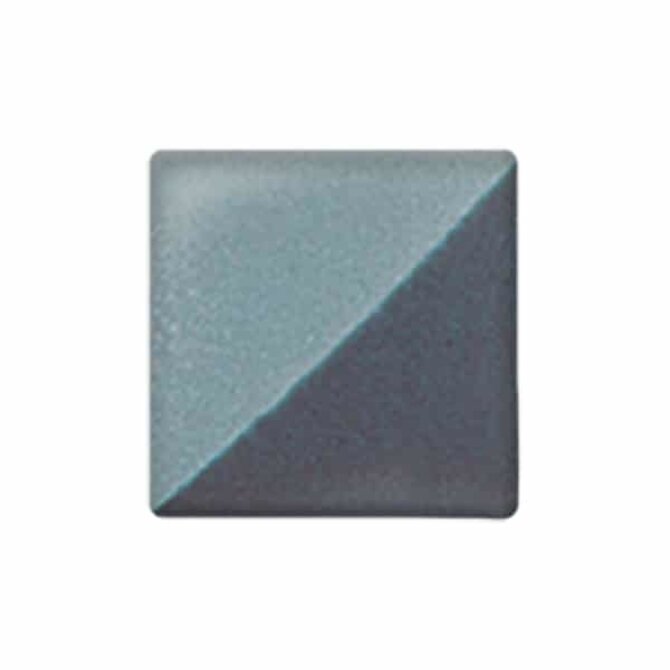
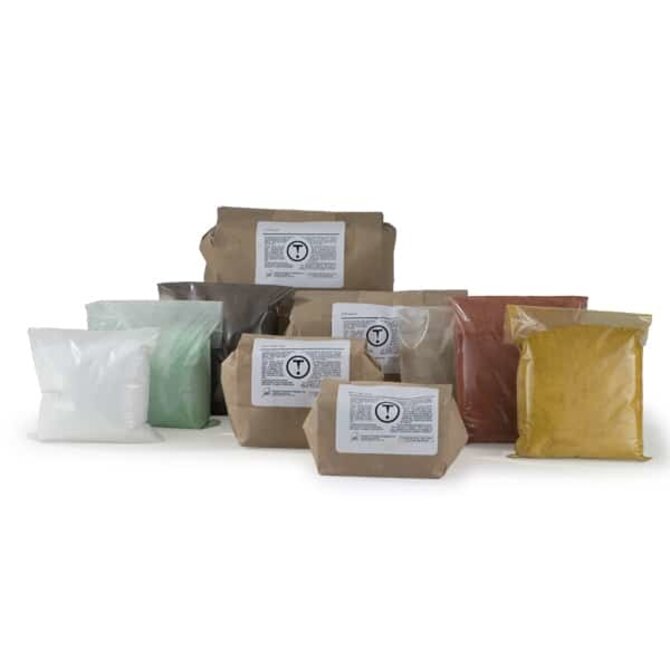
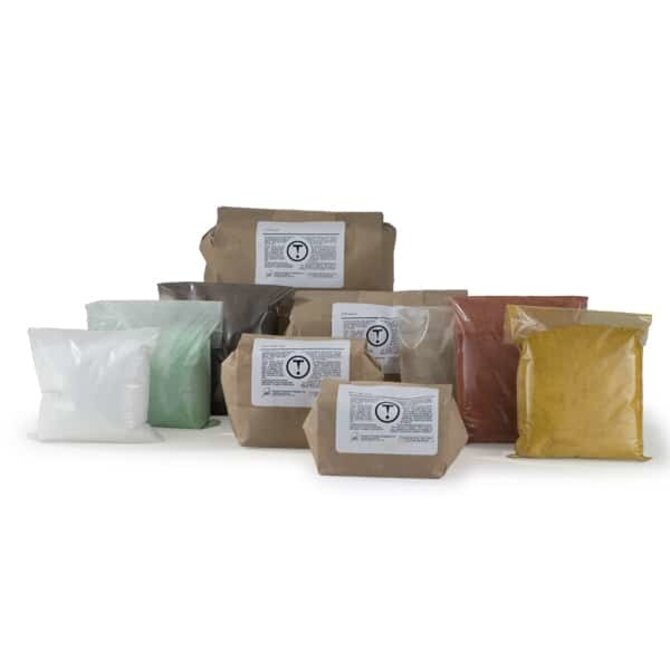





Titanium Dioxide is a glaze opacifier that is also a well-known white pigment. Titanate crystallization on cooling can lead to unique variegated surfaces.
C$26.60